Understanding Mindfulness
Mindfulness can be described as paying attention to the present moment. It is an amazingly simple process, allowing our mind and body to spend more time in the present moment. This helps us to be more connected with our here-and-now experiences.
Many of us spend a huge amount of our lives rehashing the past or imagining the future instead of focusing on the present moment. When we are ‘caught up’ in these thoughts or adopting an unhealthy amount of multitasking, we are not aware of our experiences, usually missing out on the joys of life. Some people may mistake mindfulness for trying to clear the mind of all thoughts, which is virtually impossible. It is neither about trying to relax nor to achieve a particular outcome, mindfulness rather is about noticing your here-and-now experiences, including your thoughts, and having the ability to be fully present.
By maintaining a moment-by-moment awareness of our thoughts, feelings, bodily sensations and surrounding environment, we can connect to our senses and emotions by creating a more spacious way of being in the world that is less reactive and ultimately happier!

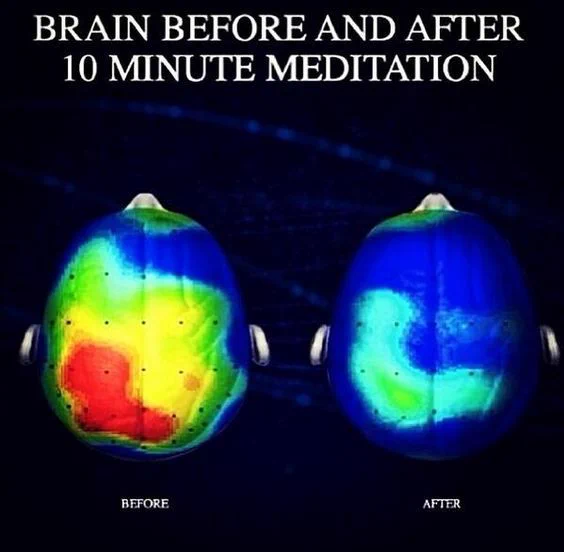
"Even short amounts of practice, like 30 minutes of meditation per day, can induce measurable changes in the brain that can be tracked on a brain scanner".
University of Wisconsin-Madison
Science And Research Behind Mindfulness
Mindfulness has taken the psychological world by storm and is changing the way we embrace positive change in people who are seeking cures for stress, anxiety, depression and physical ailments, and for people who simply wish to increase their well-being.
It has been proven that even just a few minutes of mindfulness per day has enormous benefits and can help to focus and bring full attention to the tasks. Over the last 40 years, there have been thousands of research papers written on the benefits of mindfulness. Scientists are looking at the effects of mindfulness on the brain, and in particular, its effects on two main areas of the brain – the amygdala and pre-frontal cortex. The amygdala is a primal part of the brain, associated with fear and emotion, and responsible for the first step in a chain of reactions that make up the stress response. On the other hand, the pre-frontal cortex is the part of the brain that helps with concentration, decision-making, and awareness. It also helps to control our emotional responses to stress.
Research shows that just 8 weeks of Mindfulness practice not only shrinks the amygdala but also increases the thickness of the prefrontal cortex. This means less activation of the stress response, and better control over it when it does occur!
How Does Mindfulness Help The Brain
- Mindfulness regulates the stress response by strengthening the frontal lobe, which is part of the brain responsible for ‘noticing’ or ‘thinking’.
- Engages parts of the brain that help us to regulate emotions and create a sense of safety.
- Mindfulness helps all parts of the brain work together as an integrated whole.
- When Mindfulness is practiced over time, it decreases activation in Default Mode Network –wandering ‘Monkey Mind’ –resulting in less rumination.
- Mindfulness strengthens higher-order brain functions, which help improve attention and concentration.
- Mindfulness weakens the links between the amygdala and the pre-frontal cortex -therefore less ‘reactivity’ and less stress.


Benefits Of Regular Mindfulness
- Decreased worrying thoughts and symptoms of anxiety
- Reduced reactivity and stress
- Increased resilience to life’s inevitable difficulties
- Renewed energy and reservoir of strength
- Increased self-awareness
- Improved physical symptoms and sleep
- Emotional balance and stability
- Dramatically improved concentration and memory
- Developed self-acceptance and self-confidence